
Frontier Force Regiment
Introduction
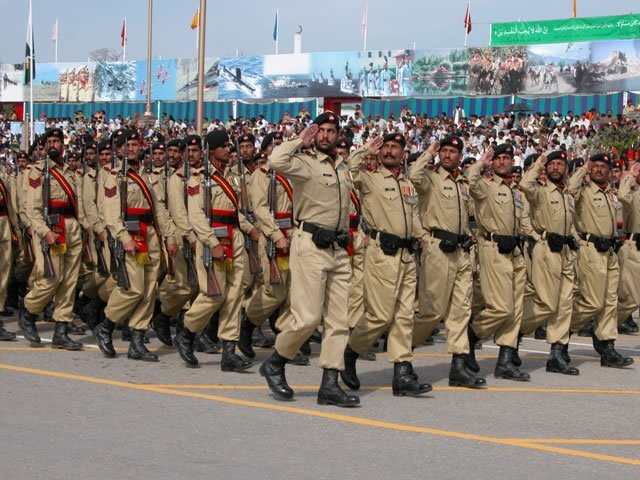
The PIFFERs are a tight knit brotherhood of soldiers, bound by a distinguished military history, a long tradition of soldiering and a strong foundation of regimental traditions. They are disciplined, hard fellows, full of natural military instincts. They are a special breed, purified in the inferno of objective realities, demanding courage, loyalty and steadfastness. During 59 years of Pakistan’s history, not a battle has been fought without PIFFERs. Frontier Force Regiments have invariably contributed to the success of every major undertaking: from Chamb-Jaurian to Hilli, from Dinajpur to Sulemanki, from Siachen to Rann of Kutch; Frontier Force Regiments have always been in the eye of the storm. From the turmoil in the wake of Partition to the floods and earthquakes in the most inhospitable terrain, Frontier Force Regiments have assisted the civil administration in an unflinching manner. In over one hundred and fifty years of its existence, the Frontier Force has kept pace with the changing times. It has developed to meet the requirements of the Army and the Nation, and to absorb various fundamental changes in the battlefield environment, encompassing induction of new weapons and equipment.
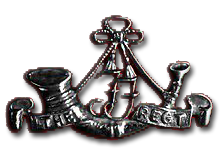
History
The significant conquests of the British in North-Western India, following the conquest of Sindh, were to include the Punjab, after taking on the Sikhs and finally the North-West Frontier of India facing Afghanistan __ the British part in the Great Game being played against the Russian Empire, that was rapidly expanding southwards through Central Asia. When the British in India set out to conquer Punjab under the Sikhs, and defeated the Khalsa Army at Sobraon in 1846, they faced two problems: firstly, they inherited the responsibility of governing and policing the newly won area and its prickly North-West frontier inhabited by Pathans, whom the British learned to treat with great respect. Secondly, they had to tackle a large number of Sikh and Muslim ex-soldiers, lawlessly roaming the land after the Khalsa Army was disbanded. The British killed two birds with one stone by raising a military force for the purpose, by recruiting those very ex-soldiers. This clever move brought into existence the nucleus of the force that has since then evolved into and thrives even today as the FRONTIER FORCE
The Earliest Frontier Force Units
The first Frontier Force unit ever was the Scinde (Sindh) Camel Corps raised at Karachi in 1843 by Lieutenant Robert FitzGerald, on the orders of Sir Charles Napier after the British conquest of Sindh. Its purpose was to pacify the lawless tribes in interior Sindh. The next was the Corps of Guides raised by Lieutenant Harry Lumsden at Peshawar in 1846, to meet the requirement of guides and interpreters while operating among the tribes of the North-West Frontier. The birth of these two corps’ actually preceded the raising of the Frontier Force proper, which they subsequently joined.
Raising of the Frontier Force
The Frontier Brigade was raised in 1846 by order of Sir Henry Lawrence, Agent to the Governor-General in the Frontier. The Frontier Brigade, consisted of the newly raised 1st to 4th Sikh Infantry. In 1847 the title “Frontier Brigade” was dropped and the units were re-designated 1st, 2nd (or Hill Corps), 3rd and 4th Regiments of Sikh Local Infantry. The successful employment of this force so encouraged Lawrence that the raising of another Trans Frontier Brigade in addition to the one mentioned above, was authorized on 18 May 1849 __ the official birthday of the Frontier Force. This force was independent of the regular army, and belonged to the Punjab Government. This irregular background was distinguished by several elements as no parade ground drill, swift tactical movement in small groups, initiative and unconcern toward routine orders, rules and regulations governing regiments of the line. These elements explain the elan and flair for which the Frontier Force is known till this day.
During World War I, 124th became famous as "War Babies", while fighting in Palestine in 1918. It was renamed as 10th battalion and stationed at Karachi as a training battalion in 1921. The battalions were renamed as 1/10, 2/10,3/10 and 4/10 Baloch etc. The 1st, 3rd and 5th battalions were the Royal Battalions. Their attire, however, was not royal blue but green and cherry, and the Regiment adopted these colours. In 1923, the training Centre shifted to Rajkot, Kathiawar but was again brought to Karachi in 1929. The group expanded during World War II, and its units fought with distinction in many theatres of War, winning awards and contributing to the galaxy of the Battle honours.
Service on the North-West Frontier
In 1851 the Trans-Frontier Brigade was redesignated the Punjab Irregular Force, or PIF. This acronym forms the first three letters of the name by which all members of the Frontier Force are so proudly known the world over “PIFFERs”. (It would be pertinent to mention that the nickname PIFFER is derived from PIF, while “FER” is added as a linguistic requirement, as Dig becomes Digger. The acronym is not derived, as popularly thought, from PIFF or “Punjab Irregular Frontier Force”. The force has never been known by this name). The same year the Corps of Guides (consisting of Cavalry and Infantry) and four Sikh Infantry units of the Frontier Brigade joined the PIF, along with one garrison artillery battery (raised as No 4 Garrison Company in 1851, converted into the Frontier Garrison Artillery and disbanded in 1925), Peshawar Horse Light Field Battery (raised 1849, became 3rd Peshawar Mountain Battery Hazara Mountain Battery (raised 1851, later 4th Hazara Mountain Battery, went to India at Partition in 1947), and the former Scinde Camel Corps, re-designated the 6th Punjab Infantry.
The composition of the Punjab Irregular Force was Punjabi Musalmans, Pathans, Sikhs, Dogras and Gurkhas __ the best soldiers, the Subcontinent had to offer.
Interestingly, the class composition was maintained on a company basis. Although the composition changed from time to time and even varied between units, a PIFFER unit would typically consist a company each of Punjabi Musalmans, Pathans, Sikhs and Dogras. This force was deployed all along the North-West Frontier, maintaining constant vigilance on various marches, and enforcing law and order.
Overseas Service
In 1852, the 4th Sikh was the first PIFFER unit to go overseas and fight a successful campaign in Burma. Eight PIFFER units participated in the so-called Indian Mutiny in 1857, winning three Victoria Crosses (British gallantry award, equivalent of the Nishan-e-Haider). The Guides wear red piping on the collar, and 9 Frontier Force blue piping on collar and cuffs, distinctions won during 1857. In 1858, Gurkha troops from PIFFER units were formed into the Hazara Gurkha Battalion later re-designated 5th Gurkhas in 1861, transferred to India at Partition in 1947.
The Punjab Frontier Force
In 1865 the force was renamed the Punjab Frontier Force (PFF). It is interesting that Sir Robert Sandeman was escorted into Balochistan by 4th Sikhs and troops of 1st Punjab Cavalry. This escort formed the first ever garrison to be stationed at Quetta. In 1886, the PFF was placed under the Commander-in-Chief,India, having joined the regular army, a major transition for the PIFFERs. The same year 2/5th Gurkha Rifles was raised, but later absorbed into the 5th Royal Gurkha Rifles.
Till the period leading up to World War I, several PIFFER units remained busy on the North-West Frontier, while some PIFFER units also went overseas to fight. These included seventeen units in the Second Afghan War 1878-80, the Guides at the defence of the Residency at Kabul, Lord Roberts famous march from Kabul to Kandahar, 1880, the Boxer Rebellion in China, 1900 and Somaliland, 1902-04. The force won twelve VCs in this period. In 1899, the 42nd Gurkha Rifles (Frontier Force) was raised, but disbanded in 1903. In 1903 Lord Kitchener abolished the three Presidency armies (Bengal, Madras and Bombay) and in the bargain PIFFER units were re-numbered. The new numbers, each with Frontier Force in brackets afterwards, were 51st to 54th Sikhs, 55th to 59th Rifles, 5th Gurkhas, the Corps of Guides, 21st to 24th Mountain Batteries, the Garrison Artillery, 21st to 23rd and 25th Punjab Cavalry. It was based on these numbers that the oldest PIFFER units earned affectionate nicknames that live to this day __ Ekwanja, Tunpur Bawanja, Royal Tirwanja, Churwanja, Chattak Pachwanja, Bhaiband Chhewanja, Susti Satwanja, Dasturi Athwanja and Garbar Unath.